

Request for proposal (RFP) processes can be cumbersome and time-consuming, often requiring meticulous effort to sift through the details and requirements. RFP management software has emerged as a key solution. Platforms like Qvidian offer advantages that can transform the RFP process from burdensome to beneficial.
Companies have begun to see the integration of this type of software as a strategic move that can streamline operations, enhance teamwork, and ultimately lead to winning more business deals. In this article, we will explore the top advantages of implementing RFP management in your company’s daily activities.
Understanding RFP Management and Its Role in Business Efficiency
Alt text: Several employees are sitting at a conference desk discussing RFP management software
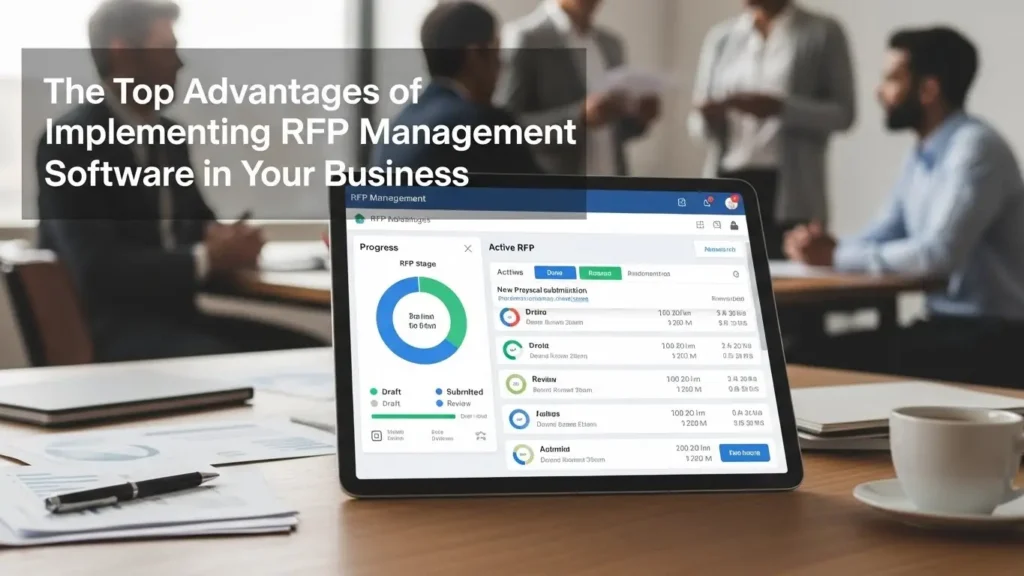
At its core, RFP management software is designed to simplify the complex RFP process, helping businesses to organize and administer requests with ease. The software provides a centralized platform where all RFP-related documents and communications can be managed effectively. This centralization reduces the likelihood of errors due to fragmented document control and improves the overall management of RFP timelines.
Typically, organizations deal with multiple proposals simultaneously, making it difficult to track progress and delegate tasks. RFP management software addresses this by enabling project managers to assign responsibilities clearly and monitor each team member’s contributions. Dashboards and tracking systems offer real-time updates, ensuring everyone involved is on the same page.
Improving Collaboration and Communication with RFP Management Tools
Alt text: Four employees are sitting at a large desk and learning how to use RFP management software on a laptop computer
One of the key advantages of introducing RFP management software is the enhancement of teamwork. The platform’s collaborative environment enables contributors from various departments to work together effectively, regardless of their physical location. Cloud-based technology permits multiple users to view and edit documents simultaneously, leading to a more dynamic and agile proposal preparation process.
Effective communication is also streamlined through the use of centralized messaging and notification systems within the software. This ensures that all stakeholders are informed of updates, changes, and deadlines, reducing the likelihood of miscommunication and errors. A well-informed team can act quickly, make informed decisions, and maintain the project’s momentum.
Streamlining the RFP Response Process To Save Time and Resources
The traditional RFP response process can be quite protracted, often involving numerous manual tasks that are as time-consuming as they are prone to human error. By automating certain aspects of the response process, RFP management software considerably reduces the time required to complete proposals. This accelerated workflow allows businesses to respond to more RFPs without a corresponding increase in resource allocation.
With the ability to leverage past proposals and the convenience of template-driven responses, companies can shave off a significant amount of the preparation time typically devoted to RFPs. The reuse of content is not only efficient but also ensures consistency in messaging and branding across different proposals, allowing for a strong and uniform identity in the market.
Moreover, RFP management platforms often come equipped with project planning and workflow tools. These tools help in scheduling tasks, automating reminders, and managing deadlines, which further serve to economize on both time and human resources. With less time spent on administrative activities, teams can allocate their efforts to refining strategy and tailoring responses for a competitive edge.
Altogether, the implementation of RFP management software stands as a strategic upgrade for any business that regularly engages in the RFP process. Rendered efficiencies, enhanced collaboration, and improved proposal quality directly contribute to increased competitiveness and client satisfaction, which are key drivers of business growth.
Source: https://pedrovazpaulo.co/